

“You were only supposed to check it.” “Nobody said it would cost more.” “The car was supposed to be ready on Friday.” These disputes often do not come from bad intentions. The customer and workshop simply remember the conversation differently.
A repair order should be a shared reference point. It should show why the customer brought the vehicle in, which work they approved, how the price was agreed and when the workshop should call again. It does not need several pages. It needs to be unambiguous.
A reported issue, diagnosis and approval are three different things
The customer usually describes a symptom: knocking when turning, an engine warning light or difficulty starting. That description is not yet a diagnosis and does not automatically authorise replacement parts.
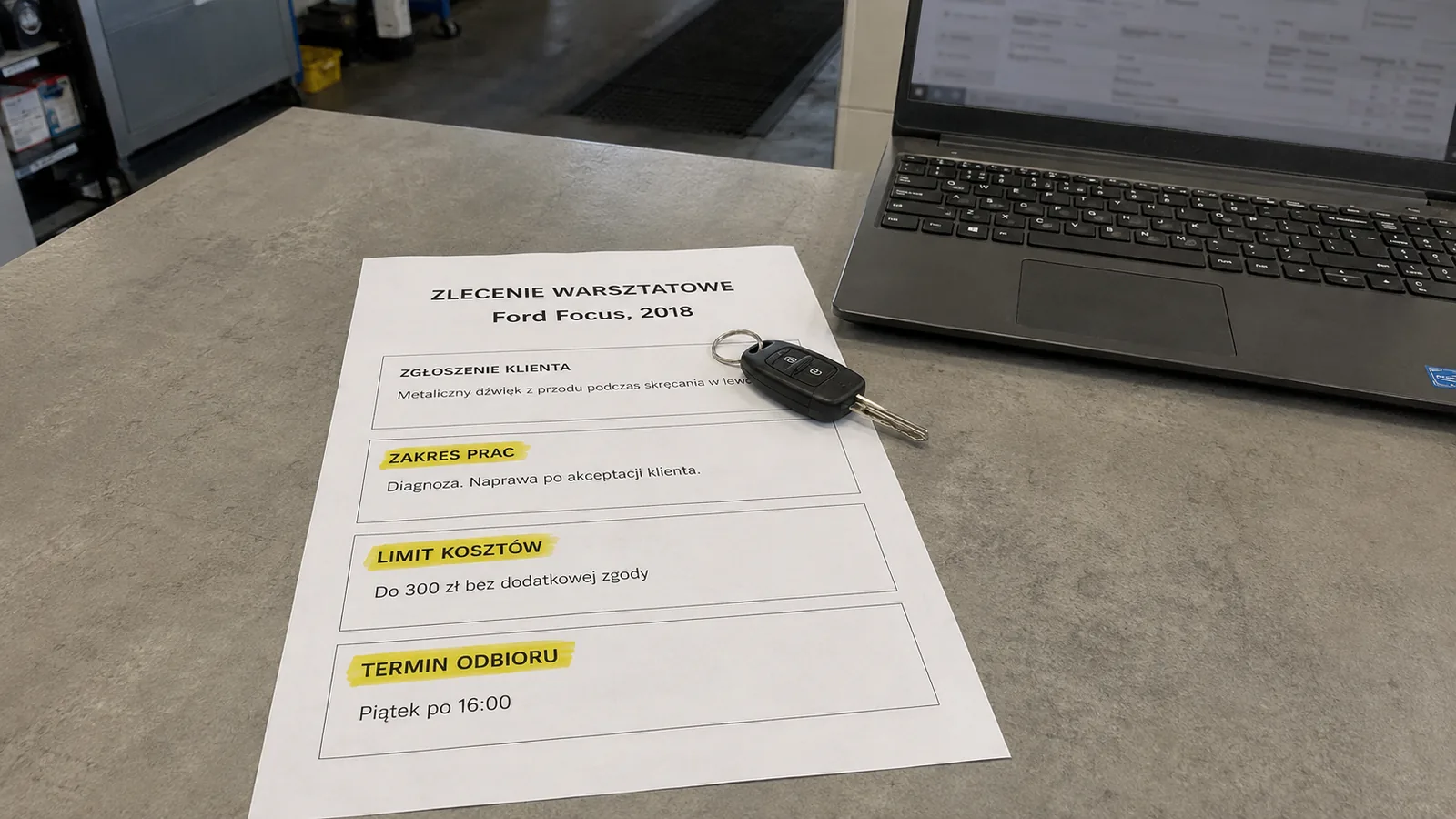
In the repair order, keep the customer's words as close to the original as possible. Instead of “damaged CV joint”, write “metallic noise from the front when turning left”. The mechanic gets a starting point, and the workshop does not decide the diagnosis before inspecting the vehicle.
The most important step is to define what happens at this stage. The customer may authorise diagnosis only, a specific service or diagnosis and repair up to an agreed limit. Without that boundary, the workshop may believe it has approval to repair while the customer expects only information about the cause and cost.
What the repair order should include
The order should let another workshop employee understand the issue without questioning the customer again.
| Item | What to record | Why |
|---|---|---|
| Customer and vehicle | Contact details, make, model, registration number, VIN and mileage | To connect the conversation to the right person and vehicle |
| Condition at check-in | Visible damage, number of keys and important items left in the vehicle | To avoid reconstructing the vehicle's condition from memory later |
| Scope | The customer's symptom, diagnosis or a specific service | To distinguish inspecting the vehicle from approval to repair |
| Price | A fixed amount, range or limit for work without another call | To establish when a new customer decision is needed |
| Timing | Diagnosis date, estimated collection and conditions that may change the timing | To prevent an approximate date being understood as a guarantee |
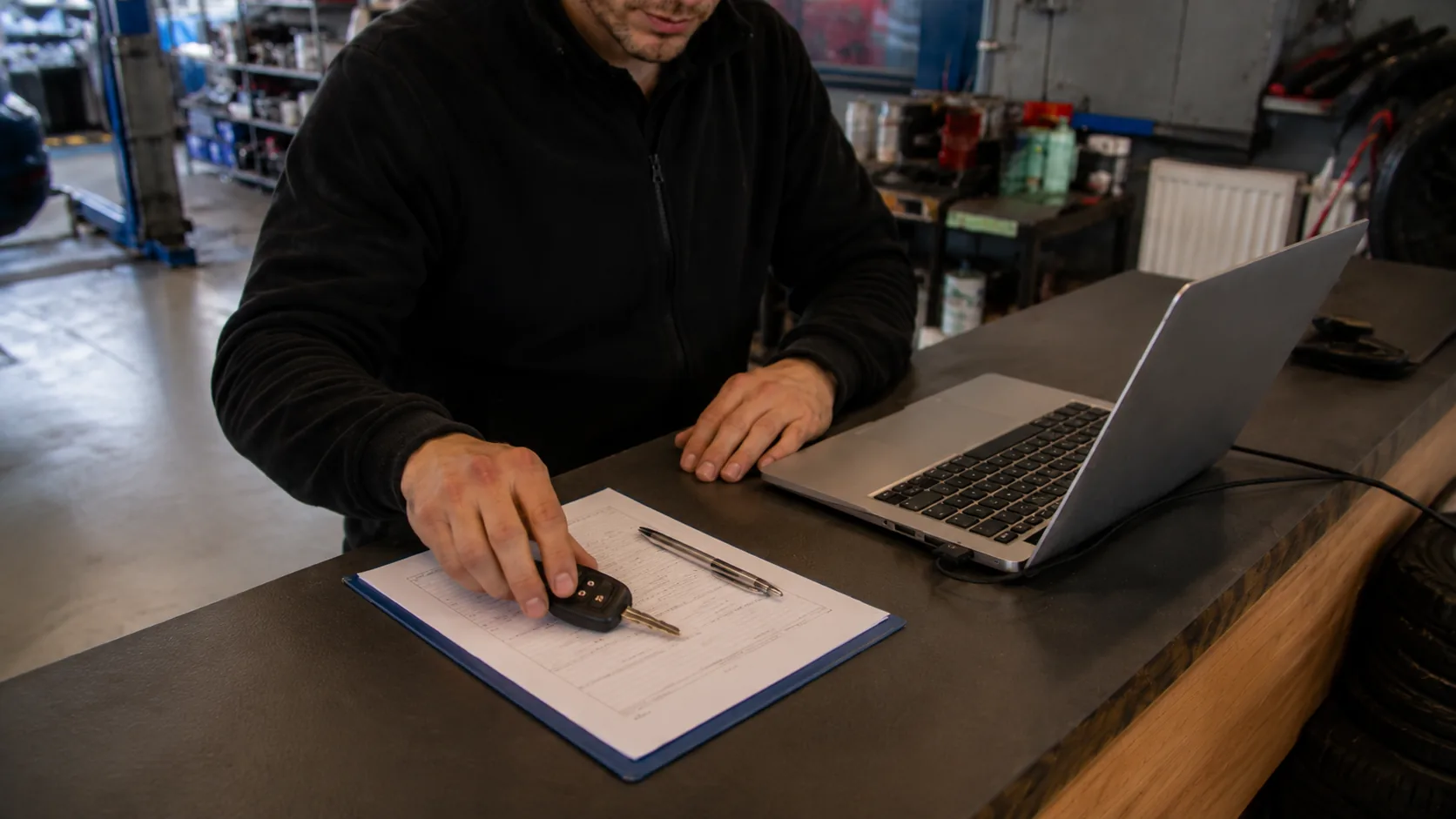
If the price is approximate, explain the range within which it may change straight away. Name the reasons too: additional damage, seized components, a different part variant or further diagnosis.
Additional work requires a new agreement
During a repair, the mechanic may find a worn boot, a leak or a component that cannot safely be refitted. That is normal. It does not mean the customer has approved every extension of the job.
The workshop should explain what it found, whether the repair is necessary, what it will cost and how it affects the timing. Only then does the customer decide.
A useful record of that conversation is specific:
Phone call, 14 May, 11:20. The customer approved replacement of the left bearing up to PLN 620. They did not approve replacement of the right bearing and requested another assessment at the next appointment.
This note helps both sides reconstruct the agreement without relying on one person's memory. On its own, however, it does not determine whether the approval is legally effective.
Poland's consumer protection authority, UOKiK, describes a similar workshop example in which a customer declines recommended replacement of additional components and the owner documents that decision. See: Consumer regulations for businesses (UOKiK, in Polish).
How to confirm a phone conversation
Not every change in scope ends with a customer's signature at the workshop. Many decisions are made by phone. Afterwards, it must be clear who spoke, which work and cost were presented, what the customer approved and whether the timing changed.
A short text message or email summary lets the customer quickly correct a mistake:
We confirm replacement of the front brake pads and discs up to PLN 1,450. Collection is planned for tomorrow after 16:00. If dismantling reveals additional work, we will contact you before carrying it out.
The summary must match the actual conversation. An automated message with a different scope creates another problem instead of solving one.
Parts supplied by the customer
If the customer brings their own part, the repair order should identify exactly what they supplied and what happens if it does not fit. Before installation, the workshop assesses compatibility and records the decision communicated to the customer.
For parts proposed by the workshop, “cheaper” and “better” are not enough. The customer should know which option they chose and which price they approved. Also agree whether they want the removed components returned.
A call recording helps but does not replace the repair order
A recording and transcript help recover the exact context. They are not a convenient substitute for an up-to-date repair order. A mechanic should not have to listen to several calls to find one cost limit.
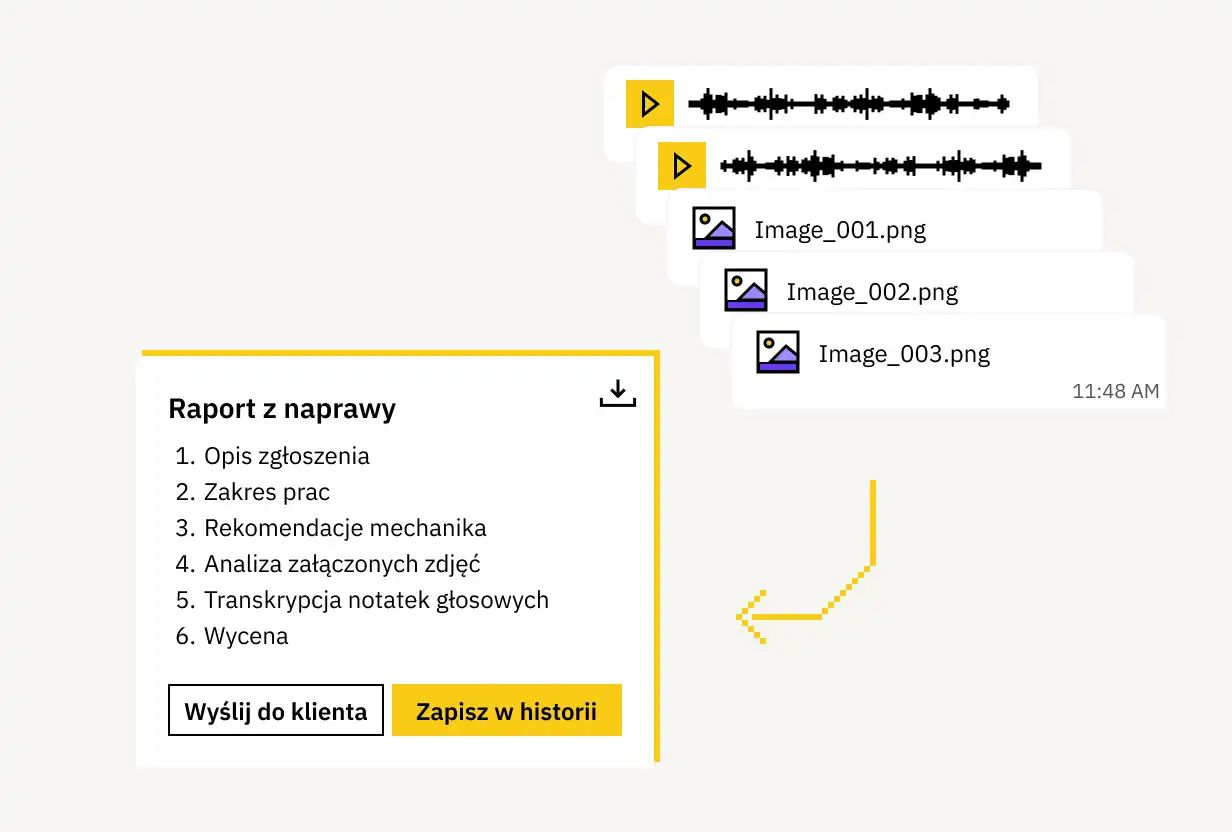
PilotGo records the call and prepares a transcript and summary. Agreed details no longer remain only on paper or in the memory of whoever answered. Repair decisions should still be recorded in the correct repair order.
Recordings and transcripts must be used in accordance with the appropriate legal basis, information obligations and rules for data access and retention.
Learn more about call history and agreed details on the PilotGo automotive workshop software page.